
Three decades ago, a new discipline burst from the walls of academia that changed perceptions of how the world works. Known as behavioural economics, it showed that humans aren’t rational when it comes to assessing their interests.
One of Australia’s top economists, the son of American economic royalty, and an Adelaide property developer are trying to create a new field they hope will become even more influential: cognitive economics, which seeks to explain why humans make decisions, especially wrong ones.
If Professor Richard Holden, Robert Akerlof and Bill Manos succeed, not only will they rewrite the rules of economics, they could influence the teaching of philosophy, education, marketing and political communications in universities around the world.
Put simply, they seek to prove what many powerful leaders throughout history have instinctively believed: an easy-to-understand lie is more powerful than a complicated truth.
Professor Holden and Dr Akerlof are not medical scientists. They won’t dissect brains to follow neural pathways. Nor are they psychologists. There won’t be interviews with individuals about how they think. As economists, they will test their theories through observations of human behaviour without ever necessarily talking to one.
Case in point, the 20 per cent surge in sales of American Eagle jeans after Sydney Sweeney starred in the retailer’s ad campaign.
The Team
Last month, some of the country’s top economic minds sipped cocktails and sampled hors d’oeuvre inside a featureless conference room in central Sydney. About 80 people turned up for the launch of the Manos Institute for Cognitive Economics by the University of NSW’s vice-chancellor, Attila Brungs.
Dr Akerlof, Professor Holden’s deputy, kept a low profile towards the back of the room while Professor Holden and Manos gave speeches. The property developer has promised to cover half the cost for five years, or $2.5 million. The university’s business school will provide the rest.
Although the institute is little more than a name for a collaboration between the two academics at the moment, those present witnessed the birth of one of the more ambitious projects in the field of economics in modern Australian history.
Cognitive economics has the potential to win Australia’s first Nobel Prize in economics, according to Harvard-trained economist Andrew Leigh, the Assistant Minister for Competition, Charities and the Treasury. Of the 15 Nobels won by Australians, all were for science or literature.
Professor Holden could have sought to dominate the study of Australian economic problems, according to Dr Leigh, instead, he made the daring decision to develop on a new field with international impact.
“Richard Holden is arguably our best living economist, and that’s marked out in his decision to start a centre which is not ‘how do we solve Australia’s big problem’, it’s about how Australia can be on the global frontier for a central challenge to the discipline of economics,” Dr Leigh says.
Professor Holden, is taking a big risk at a crucial career moment. With a PhD from Harvard and a record of cutting-edge research, including devising a way to make US electoral districts fair, he likely could have secured a position at a prestigious American university. Instead, he decided to return to Australia, train future generations of economists and push governments to adopt good policies.
If cognitive economics does not take off, he may be remembered as a talented professor who got caught in an intellectual cul-de-sac.
To improve the chances of success, Professor Holden convinced Dr Akerlof to follow him. The 44-year-old could have also pursued a comfortable career in the US or Europe, rather than working as the deputy director of an obscure two-man institute in the Sydney suburb of Randwick.
Not only does Dr Akerlof also have a Harvard PhD, his father, George Akerlof, won the 2001 Nobel Prize for economics for analyses of asymmetric information in markets. His mother, Janet Yellen, has some practical experience in the field, too. She led the Federal Reserve from 2014 to 2018 and the US Treasury under the Biden administration.
“I have always been extremely impressed by the creativity and vitality of UNSW,” Dr Akerlof says.
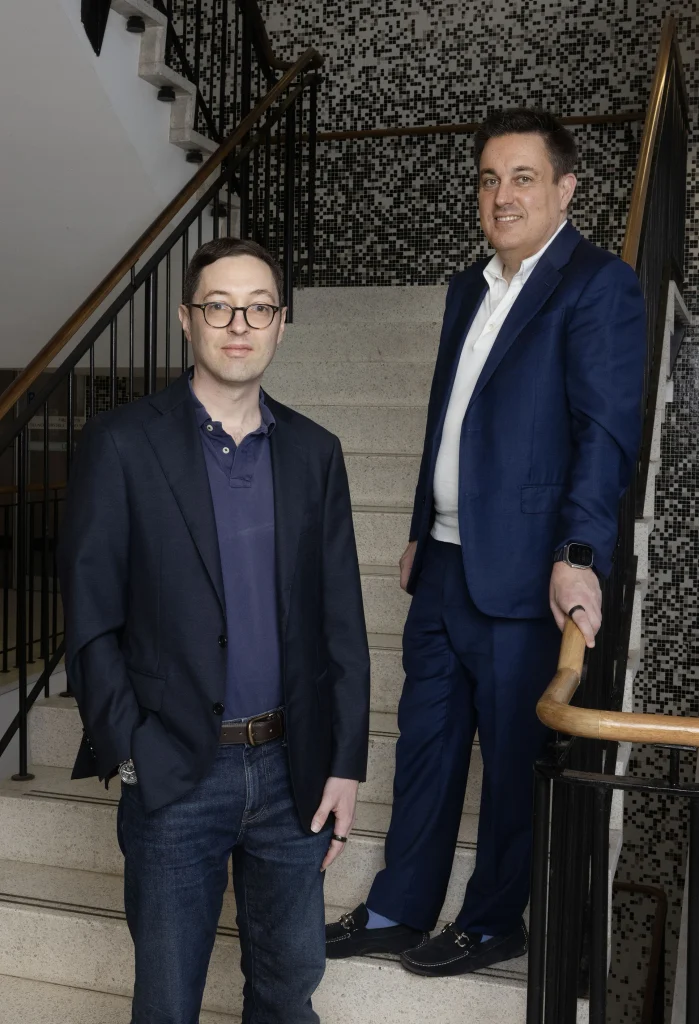
Right: Robert Akerlof and Richard Holden. Picture: Jessica Hromas
HOW HUMANS THINK
From the outside, cognitive economics sounds more like psychology than economics. Most social scientists try to understand how humans think from inferences from their actions.
Cognitive economics flips the way behaviour is analysed. It seeks to understand and explain a dark side of humanity, one in which dishonesty is rewarded, good intentions are a liability and perception does not reflect reality.
If sales of American Eagle jeans surge after actress Sydney Sweeney wore them in an ad (which they did), academics assume women are willing to spend money on clothing they think will make them look attractive. In other words, they will pay to look hot.
Cognitive economics tries to explain how a person will conclude wearing a specific jeans brand makes them more attractive, when many jeans aren’t very different from each other.
In a paper finished in May, Professor Holden, Dr Akerlof and a third researcher, Hongyi Li, explained their logic. One of their assumptions is that, in a world where people are bombarded with information, most do not have enough memory to store all the facts needed to accurately interpret the world. This problem of “limited working memory” leads people to think in steps.
“Insights unfold successively, as each new insight opens the door to others,” they wrote in Getting The Picture. Compounding the problem, simple information is more persuasive that complicated information — even if untrue.
STUPID DECISIONS
Although the theory may sound intuitive, if the economists can somehow prove their hypotheses, they will have unlocked one of the great secrets of the mind: why humans make stupid decisions.
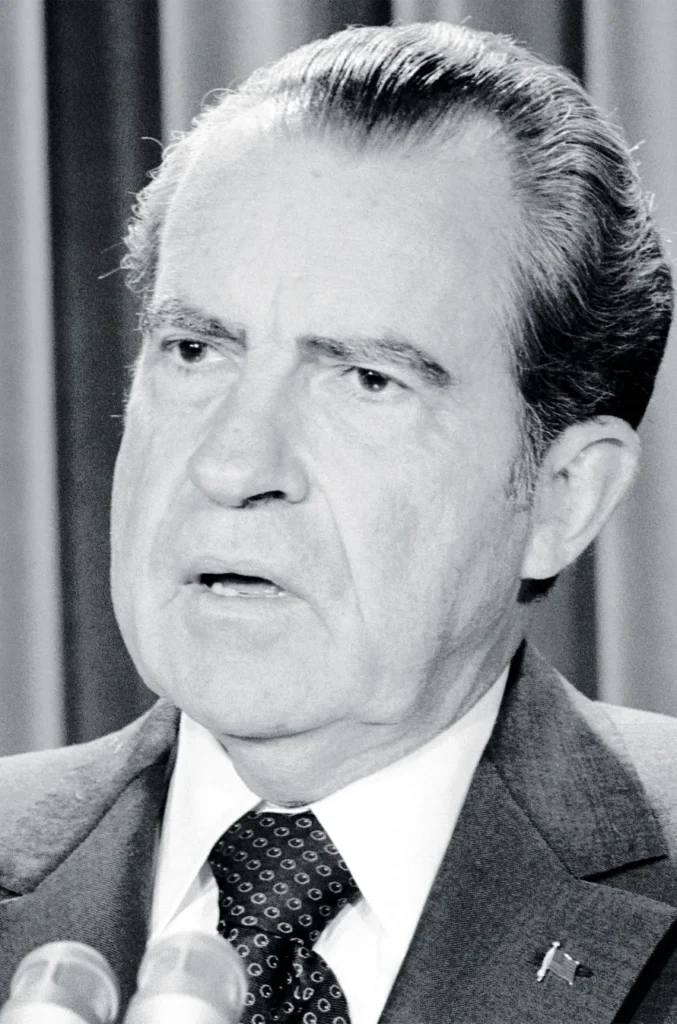
The academics used a story from political history to explain. When US Republican candidate Richard Nixon was accused of spending political donations on himself, he filmed an ad. He acknowledged the accusations, listed all his household expenses, and declared there was one gift he would keep, a cocker spaniel named Checkers.
The speech ended the scandal not because Nixon proved the allegations wrong, the economists argued, but because viewers focused on the innocence of keeping a dog.
“Simple, powerful narratives can be quite persuasive even when they are false,” they wrote in the paper.
If future research can verify the theory, or at least convince other academics of its veracity, cognitive economics could explain the power of lies.
Lies are common, but not popular in teaching. Marketers are taught about authenticity. Politicians are encouraged to share their “true selves”. Economics assumes people are mostly rational. Cognitive economics could upend all these views.
TAKING RISKS
Among those convinced was Manos, a 76-year-old lawyer who became one of Adelaide’s leading commercial property developers in the 1980s.
He is also the financier of Skin2Neuron, a potential cure for Alzheimer’s. Manos met Professor Holden when he funded a university study into economic inequality. When Professor Holden mentioned the prospect of opening a centre to research a field so new many economists had not heard of it, Manos asked what his other options were. “Now what?”
Mr Manos said to him. “Is it just going to be an academic career of no risks? I think if you’re going to take a risk, now’s the time to do it when you are at your peak. Because you might wake up in 10 or 20 years’ time and regret you didn’t take the risk you should have taken.” As for Professor Holden, he’s grateful for the push from Manos.
“Bill encouraged me to do something bold,” he says. “To take a risk. And I think I needed that push. It reminded me of what Matt Damon’s character said in Rounders: ‘You can’t lose what you don’t put in the middle. But you can’t win much either’.”